





Written by
Adam Calderone

Refugee Week - 14 - 20 June
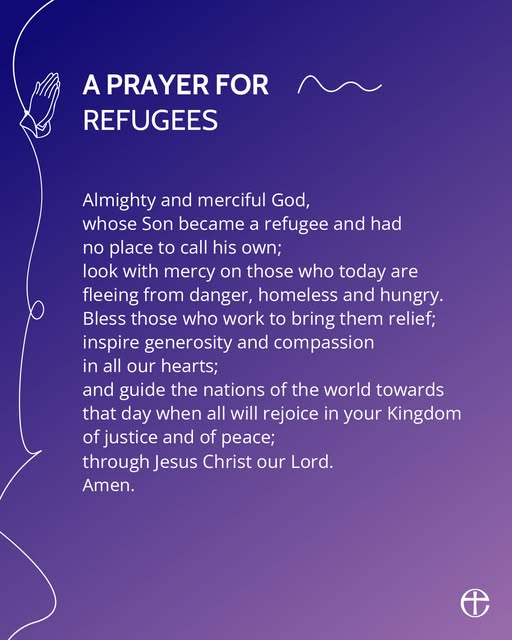
Each year Refugee Week invites our community to pause, to listen, and to respond with both compassion and courage. It is an opportunity not only to acknowledge the realities faced by millions of displaced people around the world, but also to reflect deeply on who we are as an Ignatian school and how we are called to live the Gospel today.
At the heart of our charism is a simple but demanding call: to find God in all things and to respond in love through service. This includes recognising the dignity of every human person—especially those who are marginalised, displaced, or unheard. Refugees are not statistics or distant headlines; they are our sisters and brothers, each bearing a story of loss, resilience, and hope.
St Ignatius invites us into a way of seeing the world through what we might call a contemplative gaze. In the Spiritual Exercises, he encourages us to look upon the world as God does—with compassion, attentiveness, and a deep desire for healing. Refugee Week provides us with a powerful context to practise this way of seeing. It challenges us to move beyond indifference and to become people who “feel and taste” the reality of others, rather than remaining at a distance.
In the Gospel, Jesus himself identifies with the displaced and the vulnerable. “I was a stranger and you welcomed me” (Matthew 25:35). This is not simply a moral suggestion—it is a defining characteristic of Christian discipleship. For us at Loyola, it becomes part of our everyday mission: to form young people who are not only intellectually competent but also compassionate and committed to justice.
Our Ignatian tradition speaks strongly of being “people for and with others.” The distinction is important. To be for others is to serve; to be with others is to stand in solidarity, to encounter, and to learn. Refugee Week reminds us that authentic solidarity requires listening—attending to the lived experiences of those who have been forced to flee their homes due to conflict, persecution, or environmental crisis.
As a College, we are called to respond in concrete ways. This may take the form of advocacy, education, or outreach initiatives that deepen our understanding and inspire meaningful action. It may also be expressed in the quiet, everyday gestures of welcome—creating spaces where all feel safe, valued, and included. In each of these responses, we embody the Jesuit ideal of forming a faith that does justice.
Pope Francis, himself deeply shaped by Ignatian spirituality, often speaks of the “culture of encounter.” He reminds us that true transformation begins when we allow ourselves to be touched by another’s story. Refugee Week offers precisely this invitation: to encounter, to be moved, and ultimately to act.
For our students, this is formative. It is through these moments that they develop the empathy and moral courage needed to engage with an increasingly complex world. In learning about refugees, they are not only acquiring knowledge—they are shaping their hearts and consciences. They are learning what it means to stand on the side of human dignity.
As we mark Refugee Week at Loyola College, let us be guided by the Ignatian desire to “love and serve in all things.” May we continue to cultivate a community that recognises Christ in the face of the displaced, that responds generously to need, and that works tirelessly for a more just and compassionate world.
In doing so, we live out our mission—not only in word, but in action.